
Reservoir today launched a personal cell preservation service that lets adults preserve their own immune cells through a standard blood draw. Reservoir is available today through partner clinics in San Francisco, Boston, Los Angeles, and New York City, with in-home appointments launching in select markets. Sign up at withreservoir.com to be matched with a nearby appointment or to receive updates when Reservoir comes to your city.
This press release features multimedia. View the full release here: https://www.businesswire.com/news/home/20261015983612/en/
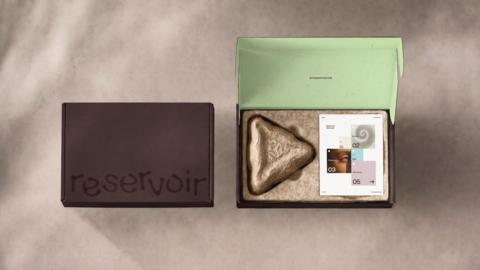
Reservoir Box Photo Credits: SDM Productions
To see Reservoir in action, go to: https://lnkd.in/p/edVhzFE9
Cord blood banking and egg freezing have long relied on cryopreservation science, and academic medical centers have preserved immune cells for years. What has been missing is a way for adults to do the same with their own immune cells: a service built for individuals, where people own their cells, the cells are stored reliably for the long term, and the member decides what happens next.
“People are tracking more of their own health than ever, and they started asking us to preserve their cells,” said Nabiha Saklayen, PhD, co-founder of Reservoir and CEO of Cellino. “Wearables and blood tests capture today’s numbers. Reservoir captures today’s cells, the youngest your immune cells will ever be, carefully processed and reliably stored. We hold them. You own them.”
Immune cell populations change over a lifetime, so a sample collected today is biologically distinct from one collected years from now. Reservoir preserves cells and is not a treatment. It does not predict or promise any future use.
“Patients come to us for guidance on longevity,” said Dr. Jay Luthar, a Harvard-trained physician who serves on the faculty at Harvard Medical School and founded Lutanen Health, one of Reservoir’s first partner clinics. “Much of what is currently being marketed is unproven, or even has the potential to cause harm. Cell preservation is unique because it is fundamentally about optionality: preserving your cells as they are today, so that whatever the science makes possible later, you still have the material to use.”
How Reservoir works
- One appointment. A standard blood draw at a partner clinic or at home. Just come hydrated, no need to fast.
- Isolation and preservation. Immune cells are isolated, counted, and cryopreserved under a standardized, documented process, then held below −150°C.
- Secure long-term storage in your name. An FDA-registered facility with continuous monitoring, automatic nitrogen fill, and backup power. Cells are stored under the member’s name and remain the member’s.
- Retrieval, built in. Cells are released only at the member’s instruction, in coordination with a licensed physician.
Blood draws at-home and via partner clinics are available in cities and towns across New England and in major metros in California, New York, New Jersey, Florida, Texas, Georgia, and Washington. Patients who prefer an in-person visit can book at partner clinics in New England, California, and New York, with new locations added regularly. A zip code lookup at withreservoir.com shows up-to-date availability by location. Upfront pricing varies by partner clinic and includes the blood draw, cell isolation, and first year of storage.
“Banking your cells is really about preserving a biological snapshot of yourself at a particular point in time. You can always collect more cells later, but you can’t go back and collect the cells you had today,” said Alex Morgan, MD, PhD, Partner at Khosla Ventures. “Reservoir’s founders, Nabiha and Marinna, have spent nearly a decade developing technology to precisely manipulate and manage individual cells at scale. There are very few teams I would trust more with something as irreplaceable as that.”
“In precision medicine, we routinely capture dynamic snapshots of a person’s health, like serial biomarkers, to understand how their biology is evolving over time. Reservoir applies that exact same forward-looking logic to the cells themselves,” shared Dr. Michael Doney, Executive Medical Director at Biograph. “It preserves living cells as they exist today, before the inevitable accumulation of cellular aging. For individuals invested in proactive, long-term healthspan, it represents a compelling strategy to preserve cellular assets for future clinical innovations.”
Reservoir is built by team Cellino, an autonomous cell manufacturing company, co-founded by Nabiha Saklayen, PhD, and Marinna Madrid, PhD, who met in a Harvard physics lab working on lasers and nanofabrication for biology. Today, Cellino has built a technology stack to automate cell production. Cellino has raised more than $96 million in venture funding, has received up to $25 million from the Advanced Research Projects Agency for Health (ARPA-H) to develop its technology, holds an Advanced Manufacturing Technology designation from the FDA’s Center for Biologics Evaluation and Research, and was named one of Fast Company’s World’s Most Innovative Companies of 2026. In 2021, Cellino became the first biotech company to win TechCrunch Disrupt’s Startup Battlefield. Saklayen is a TED speaker, an MIT Technology Review Innovator Under 35, and EY New England Entrepreneur of the Year 2025.
About Reservoir
Reservoir is a personal cell preservation service that enables adults to preserve their own immune cells through a single standard blood draw. Cells are isolated and cryopreserved by Cell Harbor, Inc., a wholly owned subsidiary of Cellino, under a documented process and stored below −150°C at an FDA-registered facility. They are held in the member’s name with a documented chain of custody, remain the member’s property, and are released only on the member’s instruction, in coordination with a licensed physician. Reservoir preserves cells. It does not treat. Reservoir was built by team Cellino, a cell manufacturing company in Cambridge, Massachusetts. To join Reservoir or learn more, visit withreservoir.com.
View source version on businesswire.com: https://www.businesswire.com/news/home/20261015983612/en/
Media gallery



